books I have read, am currently reading, and those I wish to recommend

1. Liberty’s Exiles: American Loyalists in the Revolutionary World, by Maya Jasanoff
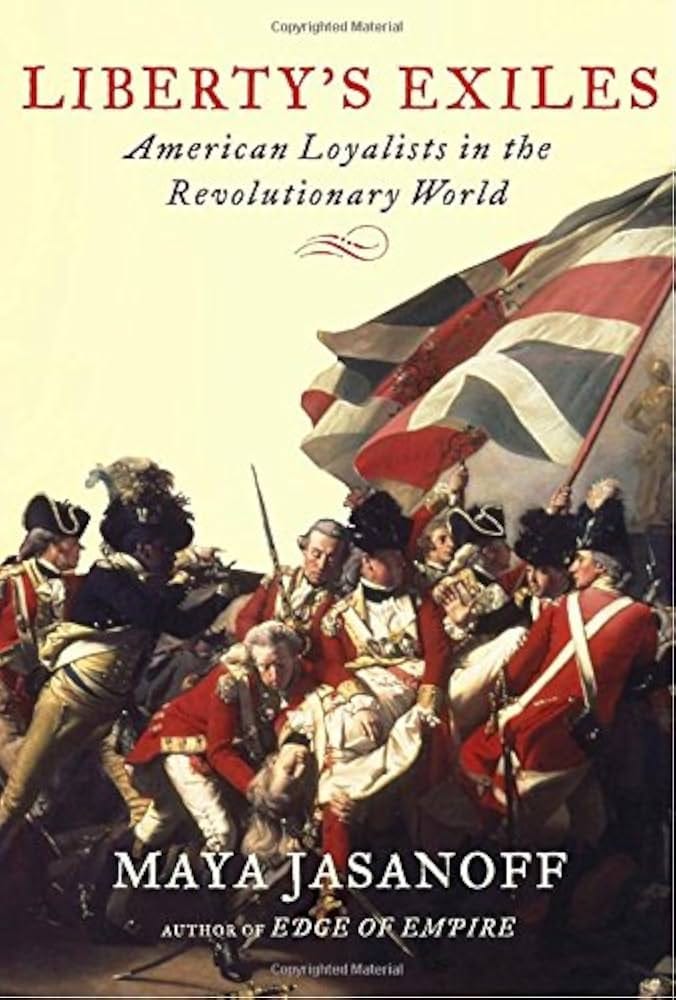
Kirkus Reviews – Jasanoff (History/Harvard Univ.; Edge of Empire: Life, Culture, and Conquest in the East 1750–1850, 2005) examines the effects of the American Revolution on those whose loyalty to the Crown compelled them to flee the new United States.
As the author writes, few expected the Revolution to succeed, but when it did, the American supporters of King George III found their property and lives in dire jeopardy—even the Anglican clergy, who had sworn fealty to George III and felt honor-bound to their oaths. Loyalists were beaten and tormented constantly.
After a swift summary of the war, Jasanoff focuses on those who did not remain. Where did they go? Did they prosper? Upper-class white loyalists were inconvenienced, but many managed to find havens elsewhere. The lower classes, however, including the American Indians and African-Americans who had sided with the British, found their lives shattered and their futures bleak.
Jasanoff moves artfully from larger global issues (where to resettle?) to individual stories of people who documented the turmoil with publications, letters and diaries. Some individuals stand out. Sir Guy Carleton organized a massive evacuation of up to 100,000 soldiers and civilians from U.S. coastal cities. Dr. William Johnston struggled with the many ill immigrants in Jamaica. John Clarkson was the white Moses of the emigration in 1792 of hundreds of blacks from Nova Scotia to Sierra Leone.
Jasanoff gives just space to each of the principal destinations—Nova Scotia, the Bahamas and Jamaica, Canada and Sierra Leone. The struggles were fierce in all the locations, but the author has perhaps her kindest words for the African settlers, who, after a devastating attack from the French, succeeded in Freetown. Jasanoff’s most sympathetic words go to the American Indians, who listened and trusted, and suffered horribly as a result. Splendidly researched, sensibly argued and compassionately told.
2. The Abolition of Sex: How the ‘Transgender’ Agenda Harms Women and Girls, by Kara Dansky
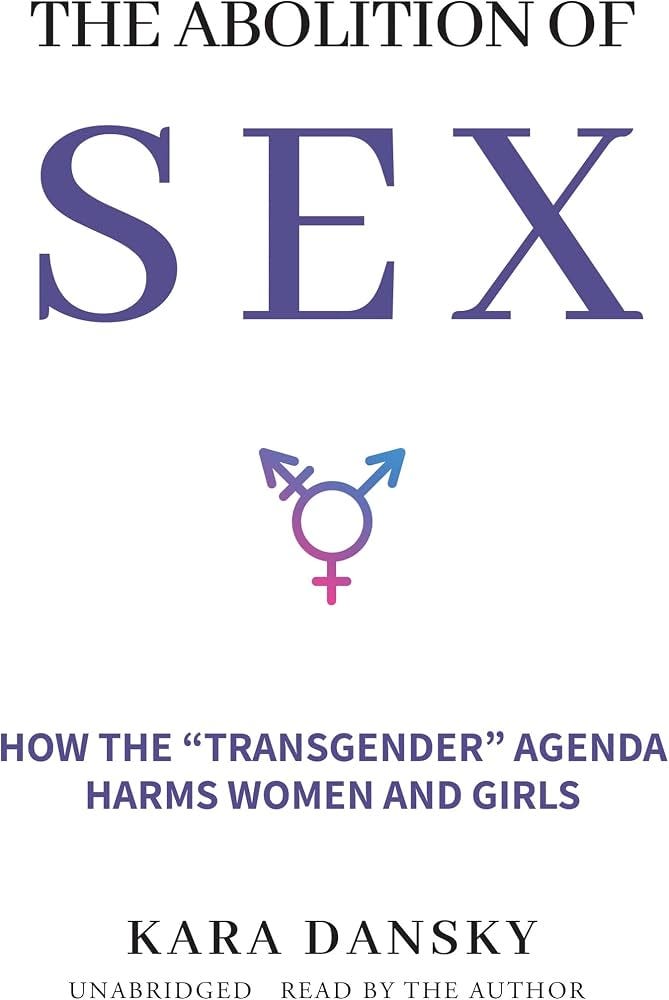
ThriftBooks – The so-called “transgender” agenda is a misogynistic assault on the rights, privacy, and safety of women and girls--and is being fuelled by a massive, vicious, and well-funded industry. Most Americans do not understand the real threat that the “transgender” agenda, or the so-called “gender identity” movement, poses to all of us--especially women and girls--nor do they understand the extent to which it is taking over US law and civil society.
The simple truth is that “gender identity” functions to abolish sex, and all of our civic institutions--government, media, academia, and business--have been completely captured by it. We have been told that “transgender” is a word to describe a marginalized group of people who are in need of civil rights protection; it is not. Instead, it is an incoherent word that is being used to advance a much broader agenda.
There are many people – including people on the political left – who understand the threat that enshrining “gender identity” in law and society poses, but they are silenced when they try to speak out. This book shines a light on the truth about “gender identity”, the “transgender” agenda, the very real threats that they pose to all of society--specifically to the rights, privacy, and safety of women and girls--and what the global Women’s Human Rights Campaign is doing to fight back.
3. The Sovereignty of Good, by Dame Iris Murdoch
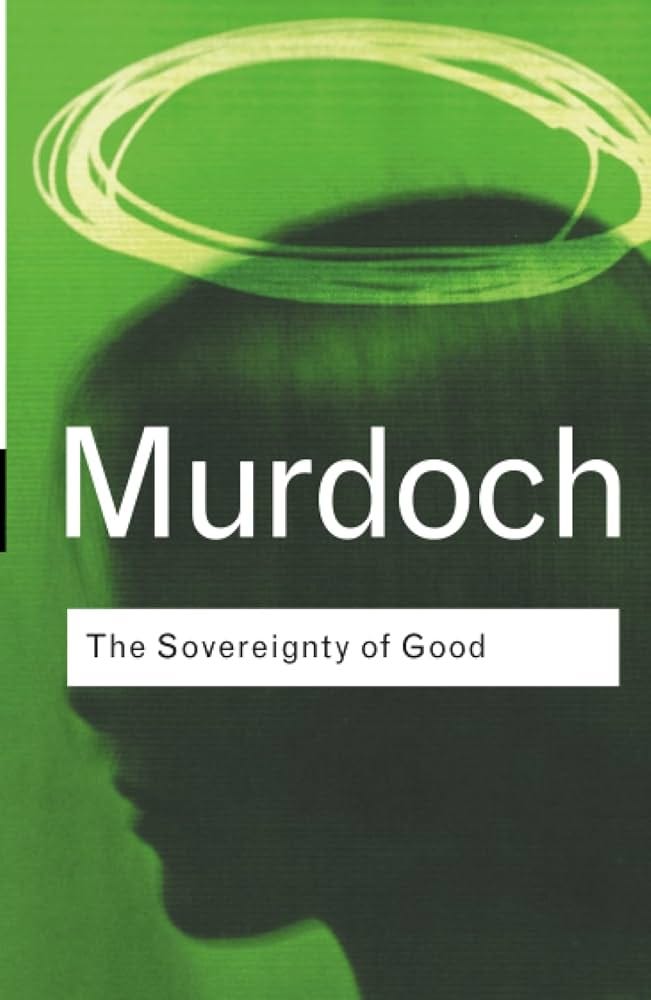
European Journal of Philosophy – Iris Murdoch’s The Sovereignty of Good (1970) is a slim volume, composed of three complementary essays written during the 1960s: “The Idea of Perfection”, “On ‘God’ and ‘Good’” and “The Sovereignty of Good Over Other Concepts”. The book, which is regarded as the most significant of Murdoch’s philosophical writings, has a reputation for being rewarding but perplexing. In a 1972 review, H. O. Mounce (1972) commended the work’s “freshness” as its “chief virtue” but warned of its many “difficulties and obscurities.” Mounce’s assessment probably remains the prevailing opinion of the book’s character.
The Sovereignty of Good is difficult because it is unconventional in a rather unique way. It is the work of someone at home in, and admiring of, Oxford linguistic philosophy, but the style of thinking it expresses is unlike anything normally associated with that genre. It challenges the moral–philosophical orthodoxies of the day, but not quite in terms those orthodoxies would recognize. Although the essays are economically written, with attention to detail and nuance of meaning, Murdoch’s eye is on the big picture. She stages a whole-hearted assault on mid-20th century British moral philosophy. She then articulates an alternative view, much influenced by Plato, invoking concepts—such as vision, attention and love—with no standing in analytic moral philosophy and deploying other more familiar notions, such as freedom, in rather unfamiliar ways. To the prosaic literalism of ordinary language philosophy, Murdoch opposes the view that myth and metaphor play an ineliminable role in moral consciousness. In all this, she is inspired not just by Plato but by such thinkers as Simone Weil and Fyodor Dostoevsky, not easy figures to bring into dialogue with Ayer, Hare and Ryle. As Anthony Kenny observed, this was a time when to “‘come out’ … as a Platonist in morals seemed as bizarre as declaring oneself a Jacobite in politics” (cited in Conradi, 2001, p. 492). Small wonder readers were intrigued and mystified. Yet Murdoch’s philosophy gradually came to influence such thinkers as John McDowell (1979), Charles Taylor (1996) and Cora Diamond (2010), and the book—although rarely cited, let alone discussed in detail—began to acquire cult status as a source of creative, and possibly transformative, insights.
4. Nobody Knows My Name, by James Baldwin
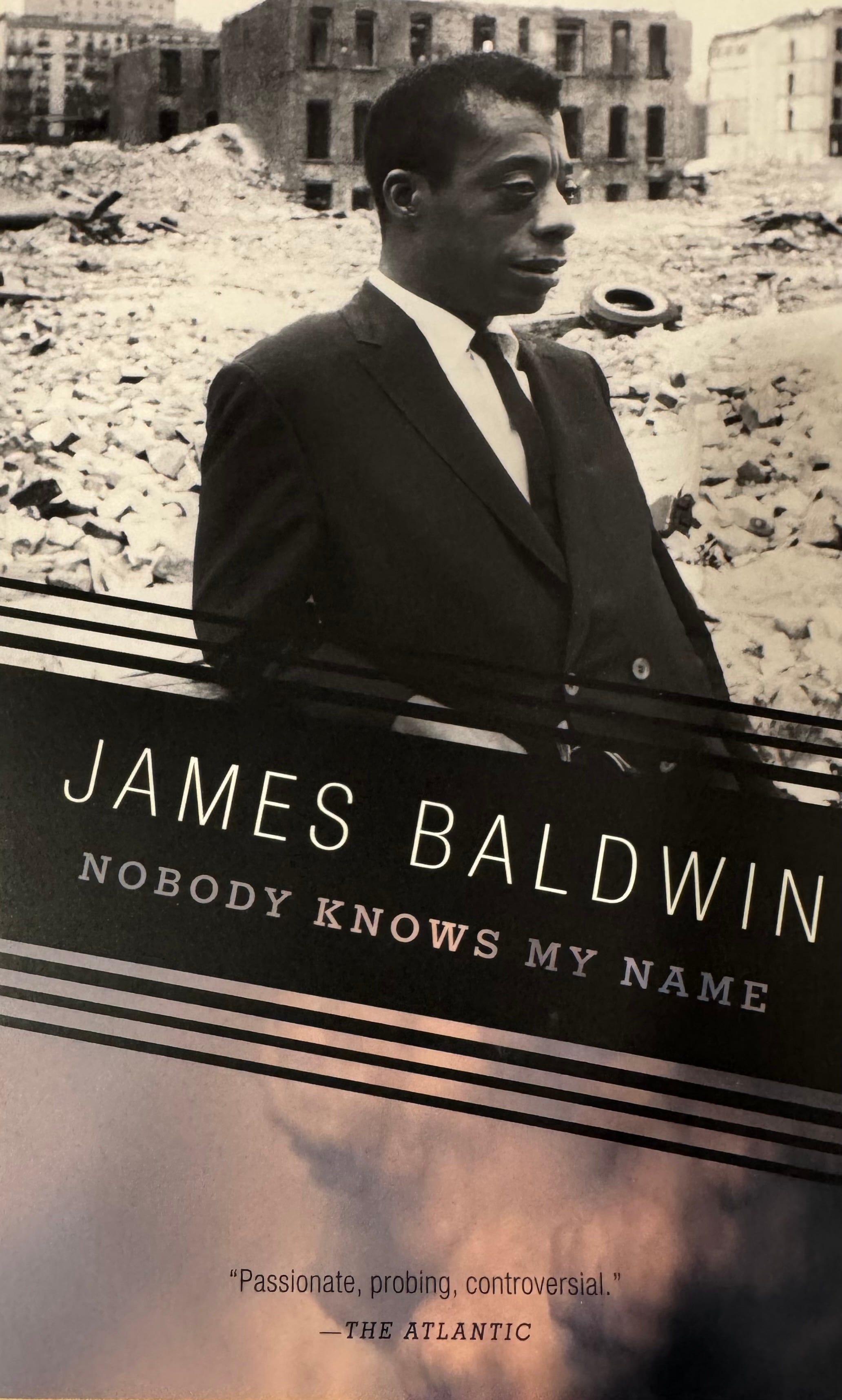
The New York Times – …This highly personal protest Baldwin has released through a masterly use of the informal essay. Writing with both strength and delicacy, he has made the essay into a form that brings together vivid reporting, personal recollection and speculative thought. One of his best pieces, for example, begins as an account of his return to the streets of Harlem where he was raised; moves toward a description of why Negroes living in housing projects resent the liberal authoritarianism with which these are often managed; rushes to some sharp observations about the residents of Harlem who “know they are living there because white people do not think they are good enough to live anywhere else”; and comes to a reflective climax with an outburst of eloquent speech: ”Negroes want to be treated like men * * *. People who have mastered Kant, Hegel, Shakespeare, Marx, Freud, and the Bible find this statement utterly impenetrable * * *. A kind of panic paralyzes their features, as though they found themselves on the edge of a steep place.”
There are other essays in “Nobody Knows My Name” composed with equal skill: a saddening account of Baldwin’s first visit South, a report on an international conference of Negro intellectuals debating whether they share a common culture, a chilling polemic against William Faulkner’s views on segregation. And especially noteworthy are three essays on Richard Wright, which range in tone from disturbed affection to disturbing malice and reflect Baldwin’s struggle to achieve some personal equilibrium as writer and Negro by discovering his true feelings toward the older man.
That Baldwin has reached such an equilibrium it would be foolish to suppose, and he himself would surely be the first to deny it. One great merit of his essays is their honesty in reflecting his own doubts and aggressions, and in recording his torturous efforts to find some peace in the relations between James Baldwin the lonely writer and James Baldwin the man who suffers as a Negro... To take a cue from his title, we had better learn his name.
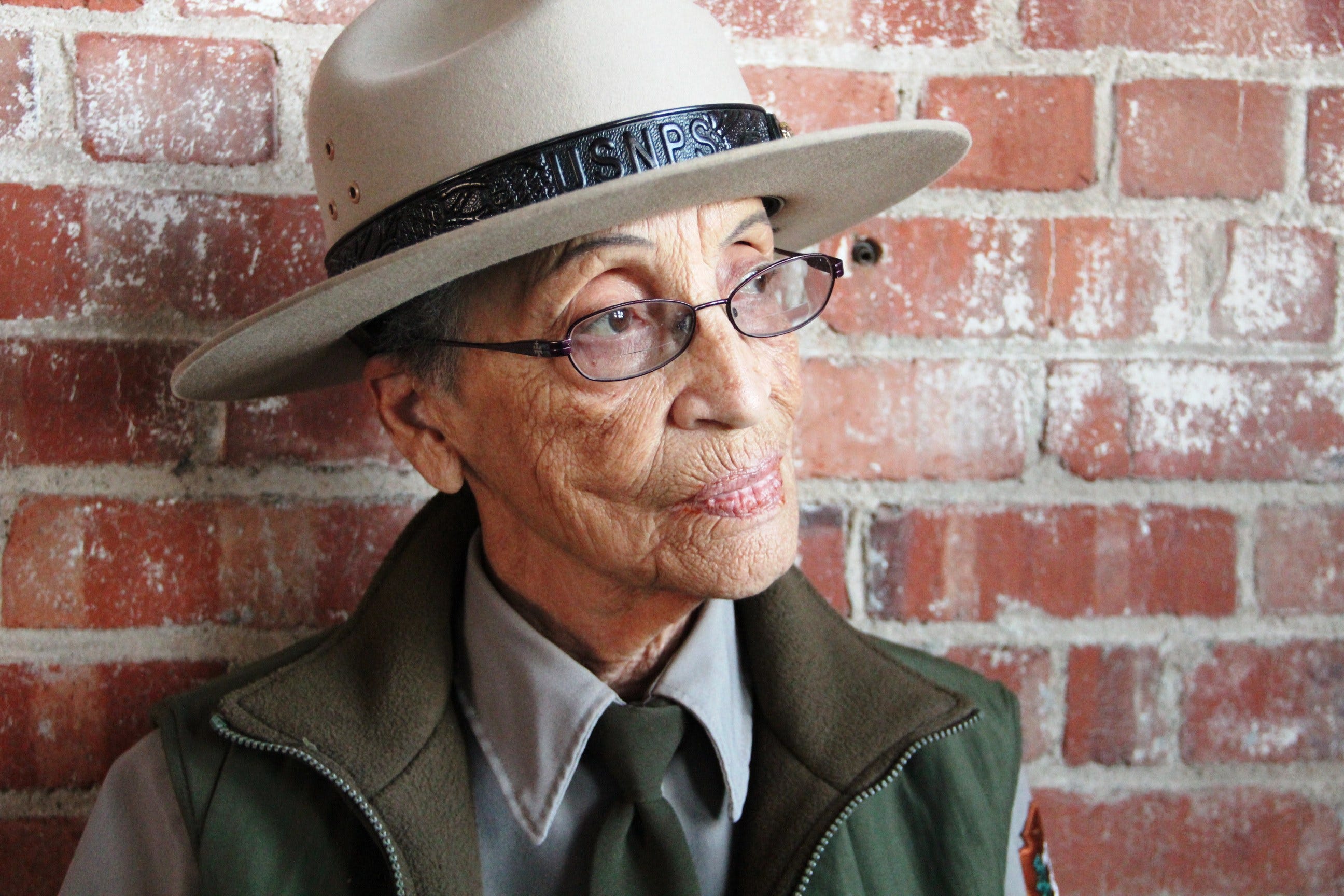
5. Sign My Name to Freedom: A Memoir of a Pioneering Life, by Betty Reid-Soskin
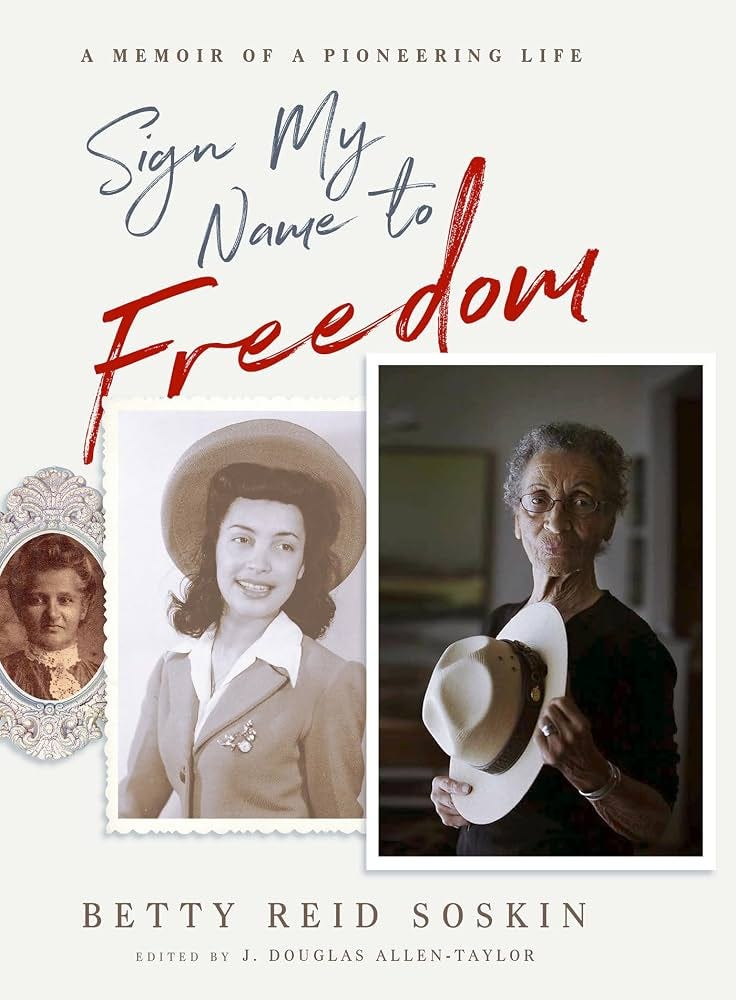
“Betty Reid Soskin is a revelation; her story, a window into a more complicated, heroic, inclusive 20th century, her life a testament to affirmation in the face of adversity. That she might also-amidst a set of astonishing careers-become a protector and interpreter of our National Parks only makes her story that much more astonishing.”
– Ken Burns
Betty Charbonnet Reid Soskin was an author, composer and singer, social and political activist, entrepreneur, mother, grandmother, and great-grandmother, historian, blogger, public speaker, and National Park Service Ranger whose remarkable life spanned the great American fault lines of the 20th and early 21st centuries.
Born into a Cajun/Creole African-American family in 1921, she spent her early years in New Orleans in the era of lynchings and Jim Crow segregation. Her family later settled in Oakland, California, following the historic floods that devastated the City of New Orleans in 1927. As a file clerk in an all-Black segregated union hall during World War II, she was witness to the flood-tide of Black and white workers who poured into the Bay area wartime shipyards, a mass migration that changed the face and social fabric of California and helped usher in the civil rights era.
Along with her first husband, Mel Reid, Betty helped integrate the East Bay suburbs by moving their family into a previously white neighborhood. Betty and Mel also founded one of the first Black-owned record shop businesses in California. After working with elected officials to rehabilitate the block on which the record shop was located, Betty served on the staff of a Berkeley City Councilmember and then as field representative to two members of the California State Assembly.
In the 1960’s and 70’s, she was active in the Bay Area’s Civil Rights and Black Power movements, as well as the movement to end the Vietnam War. In 1995 Betty was named a “Woman of the Year” by the California State Legislature. In 2005 she was named one of the nation’s ten outstanding women, “Builders of communities and dreams” by the National Women’s History Project in ceremonies in both Griffith Park in Los Angeles, and in Washington, D.C.